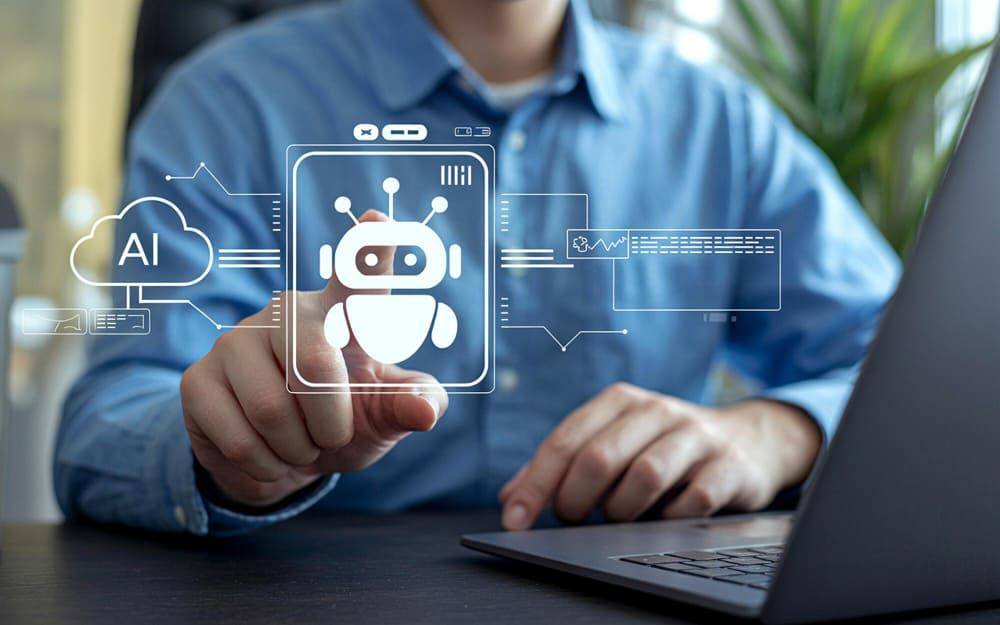
Smart Assistants in Modern Business
Digital transformation continues to reshape how organizations interact with customers, manage operations, and support employees. Among the most significant innovations in recent years are intelligent chatbots and virtual assistants. These technologies have evolved from simple automated response systems into sophisticated tools capable of handling complex interactions, streamlining workflows, and improving communication across various business functions.
As organizations seek more efficient ways to serve clients and manage growing volumes of information, intelligent assistants have become valuable components of modern business strategies. Their ability to provide instant responses, automate routine tasks, and support decision-making processes makes them increasingly important in today's digital environment.
This article explores the development, benefits, applications, and future potential of intelligent chatbots and virtual assistants for companies.
Understanding Intelligent Assistants
Intelligent chatbots and virtual assistants are software solutions designed to communicate with users through text or voice interactions. Unlike earlier automation tools that relied on predefined scripts, modern systems can interpret user requests, analyze context, and provide more relevant responses.
Powered by advancements in artificial intelligence, natural language processing, and machine learning, these solutions can understand conversational language and continuously improve their performance over time.
Organizations use intelligent assistants for a variety of purposes, including customer support, employee assistance, information retrieval, appointment scheduling, and internal workflow management.
Their versatility allows businesses to deploy them across multiple departments and operational areas.
The Evolution of Business Chatbots
Early Automation Systems
The first generation of business chatbots primarily relied on rule-based programming. These systems followed predetermined decision trees and could only respond to specific commands or keywords.
While useful for answering basic questions, they often struggled when users phrased requests differently or asked more complex questions.
The Introduction of Artificial Intelligence
Advances in artificial intelligence introduced a new generation of intelligent assistants capable of understanding intent rather than simply matching keywords.
These systems can:
- Interpret natural language
- Recognize user intent
- Analyze context
- Learn from interactions
- Improve response accuracy
As a result, businesses gained access to more flexible and capable automation tools that could handle a wider range of customer and employee inquiries.
Modern Intelligent Solutions
Today's virtual assistants integrate with various business systems, allowing them to access information, perform tasks, and facilitate communication across multiple functions.
Modern assistants can support users through websites, mobile applications, customer portals, and internal business systems, creating a seamless communication experience.
Enhancing Customer Service
One of the most common applications of intelligent chatbots is customer service.
Organizations receive inquiries around the clock, and responding quickly can significantly improve the customer experience. Intelligent assistants help address this challenge by providing immediate support whenever users need assistance.
Faster Response Times
Virtual assistants can answer questions instantly, eliminating delays associated with waiting for human representatives to become available.
Consistent Information Delivery
By drawing information from centralized knowledge sources, chatbots provide consistent responses across different interactions.
Handling High Volumes of Requests
Businesses often experience fluctuations in inquiry volumes. Intelligent assistants can manage multiple conversations simultaneously, helping organizations maintain service quality during busy periods.
Improved Accessibility
Customers can access information and assistance at any time, regardless of business hours or geographic location.
Supporting Internal Operations
The value of intelligent assistants extends beyond customer-facing applications. Many organizations use virtual assistants to improve internal processes and employee productivity.
Employee Self-Service
Employees frequently need information related to policies, procedures, schedules, and operational guidelines. Virtual assistants can provide immediate answers, reducing the need for manual support.
Knowledge Management
Organizations generate large amounts of information. Intelligent assistants help employees locate relevant resources quickly by searching knowledge bases and internal documentation.
Administrative Automation
Routine administrative tasks often consume valuable time. Virtual assistants can automate activities such as:
- Scheduling meetings
- Managing calendars
- Processing requests
- Routing inquiries
- Updating records
Automation allows employees to focus on higher-value responsibilities that require human expertise and judgment.
Improving Operational Efficiency
Efficiency is a key objective for many organizations, and intelligent assistants contribute significantly to operational improvements.
Workflow Optimization
Virtual assistants can guide users through processes, collect required information, and initiate workflows automatically.
Reduced Manual Work
By automating repetitive tasks, organizations can minimize administrative burdens and improve consistency across operations.
Better Resource Allocation
When routine inquiries are handled automatically, human teams can dedicate more attention to complex issues and strategic initiatives.
Enhanced Collaboration
Many intelligent assistants integrate with business applications, helping teams access information and coordinate activities more efficiently.
Personalization and User Experience
Modern consumers and employees increasingly expect personalized experiences. Intelligent assistants help organizations meet these expectations by tailoring interactions based on user preferences and previous engagements.
Context-Aware Conversations
Advanced systems can maintain conversational context, creating more natural and meaningful interactions.
Customized Recommendations
Virtual assistants can suggest relevant resources, services, or next steps based on user needs and interaction history.
Continuous Improvement
Machine learning capabilities allow intelligent assistants to refine their responses and improve accuracy over time, creating better experiences for users.
Personalization contributes to stronger engagement and more effective communication.
Security and Data Protection
As intelligent assistants become more integrated into business operations, security remains a critical consideration.
Organizations must ensure that virtual assistants operate within secure environments and follow established data protection practices.
Important security measures often include:
- User authentication controls
- Access management systems
- Data encryption
- Activity monitoring
- Secure integration frameworks
A strong security strategy helps organizations maintain trust while protecting sensitive information.
Emerging Trends in Intelligent Assistants
The future of intelligent assistants is shaped by ongoing technological innovation and evolving business needs.
Several trends are expected to influence future development:
Advanced Conversational Capabilities
Natural language understanding continues to improve, enabling more sophisticated and human-like interactions.
Multimodal Communication
Future assistants may combine text, voice, visual content, and contextual data to provide richer user experiences.
Greater Integration
Organizations increasingly seek unified technology ecosystems. Intelligent assistants are expected to connect more deeply with operational systems, knowledge platforms, and workflow tools.
Predictive Assistance
Future solutions may proactively provide information and recommendations based on user behavior, business objectives, and operational patterns.
These advancements have the potential to make intelligent assistants even more valuable across a wide range of industries.
Conclusion
Intelligent chatbots and virtual assistants have become essential tools for modern organizations seeking to improve communication, streamline operations, and enhance user experiences. What began as simple automation technology has evolved into sophisticated systems capable of supporting customers, employees, and business processes in meaningful ways.
Through advances in artificial intelligence, natural language processing, automation, and integration capabilities, these solutions continue to expand their role within organizations. As technology evolves, intelligent assistants are expected to become even more effective, helping businesses operate more efficiently, improve accessibility, and create stronger digital experiences.
For companies navigating an increasingly connected world, intelligent assistants represent an important step toward smarter, more responsive, and more efficient operations.
Olivia Campbell
I love how this blog breaks down complex SaaS solutions into understandable concepts.
Noah Bennett
The coverage on intelligent chatbots and virtual assistants has transformed the way I approach digital marketing strategies.